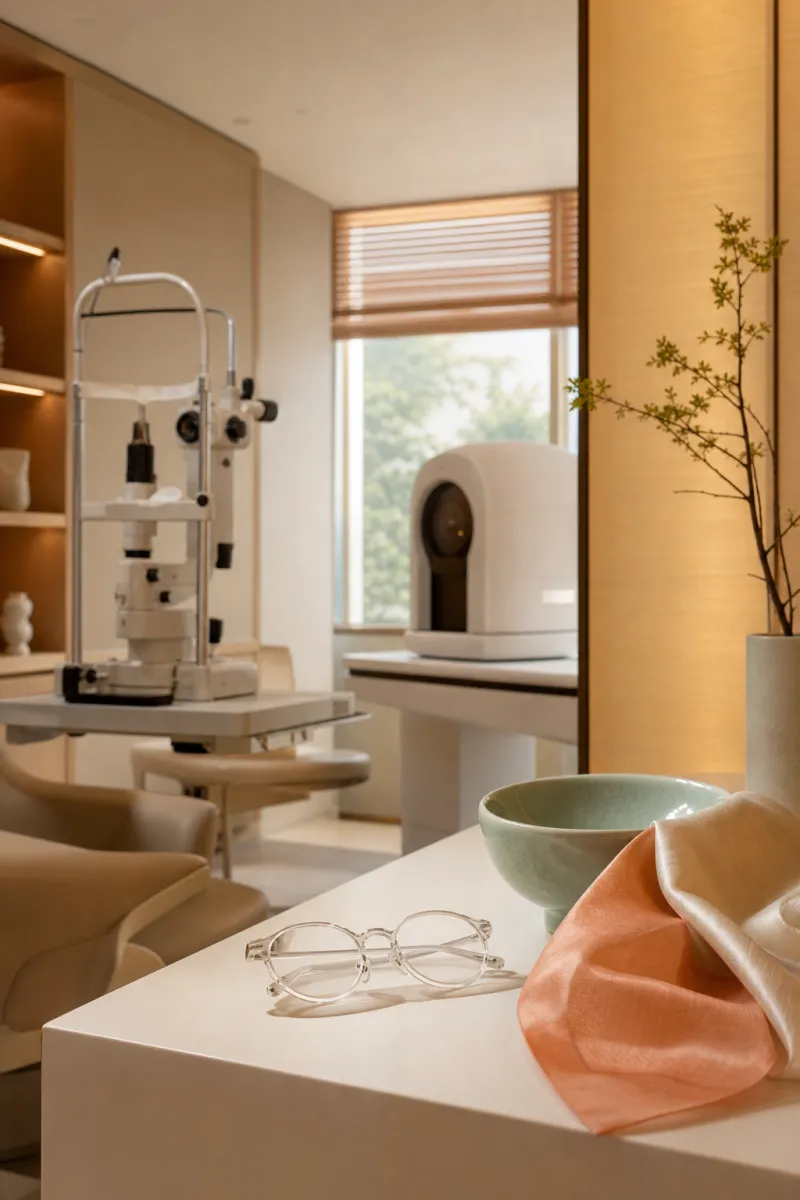
ICL surgery in Korea places a thin artificial lens behind the iris and in front of the natural lens through a small corneal incision, removing no corneal tissue. It is often considered for moderate to high myopia and for corneas unsuited to laser correction. Drops numb the eye, eye pressure is checked the same day, and vision usually improves within the first day or days, though this varies. The surgeon decides when you may fly.
Clinics in Korea
10 clinics for Vision correction in Korea
| # | Clinic | Devices & products | Area | Languages | Listed price | Google rating |
|---|---|---|---|---|---|---|
| 1 | Clear Seoul Eye Clinic | SMILE Pro · SMILE · LASIK · Presbyopia correction | Gangnam Station | English · Español · 日本語 · ไทย | ₩4,000,000 | 5.0 (328) |
| 2 | Healing Eye Clinic | SMILE · LASIK · LASEK | Sinnonhyeon Station | English | ₩6,000,000 | 4.8 (223) |
| 3 | Apgujeong Eye Clinic | SMILE Pro · SMILE · LASIK | Sinsa Station | English · 日本語 · 中文 · Монгол | - | 4.9 (334) |
| 4 | Gangnam Smile Eye Clinic | SMILE · LASIK · LASEK | Gangnam Station | English · Монгол | - | 5.0 (528) |
| 5 | B&VIIT EYE CENTER | SMILE Pro · SMILE · LASIK | Korea | - | - | 4.9 (1,289) |
| 6 | Bright St. Mary's Eye Clinic (BSM, Gangnam) | SMILE · LASIK · LASEK | Gangnam Station | English · 中文 | - | 4.9 (699) |
| 7 | Gangnam Cube Eye Clinic | SMILE · LASIK · LASEK | Gangnam-gu Office Station | English · 中文 · Русский | - | 5.0 (79) |
| 8 | Dream Eye Center | SMILE · LASEK · ICL lens implant | Gangnam Station | English | - | 5.0 (298) |
| 9 | SNU Eye Clinic | SMILE Pro · SMILE · LASIK | Sinsa Station | English · 中文 · Монгол · Русский | - | 4.8 (360) |
| 10 | Share Bright Vision Eye Clinic (Gangnam) | SMILE · LASIK · LASEK | Gangnam Station | English | - | 4.7 (118) |
 1
1. Clear Seoul Eye Clinic
★ 5.0328 Google reviewsClear Seoul Eye Clinic sits a 2-minute walk from Gangnam Station Exit 10, a vision clinic that holds a 5.0 Google rating across 328 reviews. It lists vision correction on its menu. It consults in English, Spanish, Japanese and Thai, and listed vision correction prices start at ₩4,000,000.
Gangnam Station clinic for SMILE, cataract and presbyopia care
- SMILE & LASIK
- Cataract lenses
- Dry eye care
- The site covers SMILE Pro, Personal Eyes LASIK, same-day LASEK, ICL, cataract and glaucoma care.
- A Taiwan-facing version is linked from the language menu alongside Korean and English.
Cataract and presbyopia patients · Traditional Chinese speakers
- Location
- Gangnam Station Exit 10, 154 m (2-minute walk); Sinnonhyeon Station (Line 9 / Sinbundang Line) Exit 7, 10-minute walk
- Languages
- English · Español · 日本語 · ไทย
- Listed price
- From ₩4,000,000
2. Healing Eye Clinic
★ 4.8223 Google reviewsHealing Eye Clinic runs a vision clinic a 1-minute walk from Sinnonhyeon Station; its Google rating is 4.8 from 223 reviews. Vision correction is on its menu. Consultations are available in English, and its listed vision correction price starts from ₩6,000,000.
Sinnonhyeon eye clinic for LASIK, SMILE, ICL and cataract
- Interpreters on site
- Same-price policy
- Late Fridays
- Japanese, Traditional Chinese and English interpreters join consultations, according to the English site.
- Friday hours run until 21:00, and the same surgeon handles the exam, surgery and aftercare.
Cataract lens choices · Japanese or Chinese speakers
- Location
- Sinnonhyeon Station, 1-minute walk
- Languages
- English
- Listed price
- From ₩6,000,000
3. Apgujeong Eye Clinic
★ 4.9334 Google reviewsApgujeong Eye Clinic is a 1-minute walk from Sinsa Station Exit 4, a vision clinic with a 4.9 average from 334 Google reviews. It lists vision correction on its menu. Consultations are available in English, Japanese, Chinese and Mongolian.
Sinsa Station eye clinic for SMILE Pro and ICL
- SMILE & ICL
- Viewable operating rooms
- Sinsa Station
- The English site describes transparent operating rooms and a one-stop implantable lens centre.
- The clinic says it has performed SMILE since 2011 and was an early adopter of SMILE Pro.
SMILE Pro candidates · ICL lens selection
- Location
- Sinsa Station Exit 4 (Line 3 & Shinbundang Line), 1-minute walk
- Languages
- English · 日本語 · 中文 · Монгол
4. Gangnam Smile Eye Clinic
★ 5.0528 Google reviewsGangnam Smile Eye Clinic is a vision clinic a 1-minute walk from Gangnam Station Exit 10, rated 5.0 from 528 Google reviews. Vision correction is on its menu. It consults in English and Mongolian.
Gangnam Station clinic for SMILE, LASEK and cataract care
- SMILE focus
- One-stop care
- Two floors
- The site describes one-stop care covering vision correction, presbyopia, cataract, glaucoma and oculoplastic treatment.
- It closes on Wednesdays, Sundays and public holidays, and lists a Mongolian-language direct line.
SMILE and LASEK candidates · Cataract and presbyopia care
- Location
- Line 2 Gangnam Station Exit 10, 1-minute walk
- Languages
- English · Монгол
 5
5. B&VIIT EYE CENTER
★ 4.91,289 Google reviewsB&VIIT EYE CENTER sits in Korea, a vision clinic that holds a 4.9 Google rating across 1,289 reviews. It lists vision correction on its menu.
Gangnam Station centre for SMILE, ICL and cataract surgery
- Established 1994
- AI-assisted planning
- Same-day option
- Established in 1994, the centre performs SMILE Pro, SMILE, LASIK, LASEK, ICL and cataract surgery.
- An English-speaking coordinator supports international patients, and the site lists four foreign languages.
Thin corneas (LASEK) · English, Japanese, Chinese speakers
- Location
- Korea
6. Bright St. Mary's Eye Clinic (BSM, Gangnam)
★ 4.9699 Google reviewsBright St. Mary's Eye Clinic (BSM, Gangnam) runs a vision clinic a 1-minute walk from Gangnam Station Exit 1; its Google rating is 4.9 from 699 reviews. Vision correction is on its menu. Consultations are available in English and Chinese.
Gangnam Station eye clinic for SMILE, LASEK and ICL
- SMILE & LASEK
- Multi-floor clinic
- Late Fridays
- The clinic describes itself as an early provider of LASIK and LASEK in Korea.
- Listed procedures include Smart Nova Pro, Silk SMILE, 2-DAY LASEK and lens implants.
Lens implant candidates · Friday evening visits
- Location
- Gangnam Station Exit 1, 1-minute walk
- Languages
- English · 中文
7. Gangnam Cube Eye Clinic
★ 5.079 Google reviewsGangnam Cube Eye Clinic is a 1-minute walk from Gangnam-gu Office Station Exit 3, a vision clinic with a 5.0 average from 79 Google reviews. It lists vision correction on its menu. Staff consult in English, Chinese and Russian.
Gangnam-gu Office eye clinic for vision correction and cataract
- Glaucoma & retina
- Four-language guidance
- Sixth-floor clinic
- Care covers SMILE LASIK, ICL, ortho-K lenses, cataract, retina, glaucoma and dry eye.
- Guidance and online inquiries are available in Korean, English, Chinese and Russian.
Multifocal cataract lenses · Russian or Chinese speakers
- Location
- Gangnam-gu Office Station (Line 7 / Suin-Bundang Line) Exit 3-1, 1-minute walk
- Languages
- English · 中文 · Русский
8. Dream Eye Center
★ 5.0298 Google reviewsDream Eye Center is a vision clinic by Gangnam Station Exit 1, rated 5.0 from 298 Google reviews. Vision correction is on its menu. It consults in English.
Gangnam Station eye clinic for SMILE, LASEK and ICL
- Vision correction
- English-speaking staff
- 14th-floor clinic
- The clinic has offered vision correction, presbyopia and cataract surgery and general eye exams since 2000.
- Its English site says English-speaking ophthalmologists and a global care team assist international patients.
High myopia consultations · English-language care
- Location
- Gangnam Station Exit 1 (Line 2 / Shinbundang Line)
- Languages
- English
9. SNU Eye Clinic
★ 4.8360 Google reviewsSNU Eye Clinic sits by Sinsa Station Exit 4, a vision clinic that holds a 4.8 Google rating across 360 reviews. It lists vision correction on its menu. Consultations are available in English, Chinese, Mongolian and Russian.
Sinsa eye clinic for SMILE, ICL and cataract surgery
- SMILE & ICL
- International patients
- Sinsa Station
- The clinic says it has performed SMILE since 2011 and took part in early clinical research.
- The English site describes staff support for international patients.
Toric ICL candidates · SMILE candidates
- Location
- Sinsa Station Exit 4; Nonhyeon Station Exit 8 (158 m straight ahead) - per the Korean site
- Languages
- English · 中文 · Монгол · Русский
10. Share Bright Vision Eye Clinic (Gangnam)
★ 4.7118 Google reviewsShare Bright Vision Eye Clinic (Gangnam) runs a vision clinic a 1-minute walk from Gangnam Station Exit 9; its Google rating is 4.7 from 118 reviews. Vision correction is on its menu. Staff consult in English.
Gangnam eye clinic for cataract, presbyopia and dry eye
- Cataract & presbyopia
- Dry eye care
- Multi-floor centre
- The clinic covers cataract, presbyopia, vision correction, dry eye, retina and oculoplastic care.
- The group also runs an Anyang clinic alongside the Gangnam clinic.
Dry eye treatment · Retina checks
- Location
- Gangnam Station Exit 9, 1-minute walk
- Languages
- English
Prices
Vision correction cost in Korea
Prices below come from the listed clinics' own price lists. Vision-correction and cataract surgery are VAT-exempt medical care in Korea, so the listed price is the price you pay.
GLAZE ICL
Price at 1 listed clinic · approx. $2,909₩4,000,000Compare clinicsEVO+ ICL
Price at 1 listed clinic · approx. $3,636₩5,000,000Compare clinicsEVO+ ICL Toric (astigmatism)
Price at 1 listed clinic · approx. $4,364₩6,000,000Compare clinicsEVO ICL (both eyes)
Price at 1 listed clinic · approx. $4,364₩6,000,000Compare clinicsEVO Viva (both eyes)
Price at 1 listed clinic · approx. $4,727₩6,500,000Compare clinicsEVO ICL Toric (both eyes)
Price at 1 listed clinic · approx. $4,727₩6,500,000Compare clinicsIs it for you?
Who Vision correction in Korea suits, and who should wait
A lens implant is often considered for adults with moderate to high myopia and for eyes whose corneas are too thin or otherwise unsuitable for laser correction. Published cohorts also include low-to-moderate myopia, so a strong prescription is not a requirement. Toric versions correct astigmatism. Age limits and prescription ranges vary by product and by country approval.
Suitability rests on two measurements a laser candidate never needs: the depth of the space at the front of the eye, and the count of endothelial cells lining the inner cornea. Eyes without enough room, or with a low cell count, are not suitable. The implant will not prevent cataract, will not remove the baseline retinal risks of a highly myopic eye, and will not stop reading glasses being needed with age.
Usually a good fit
- Moderate to high myopia with a stable prescription
- Cornea too thin or otherwise unsuited to laser
- Astigmatism that a toric lens can correct
- Adequate anterior chamber depth and endothelial cell count
May be better to wait
- Pregnancy (usually postponed)
- Existing cataract or glaucoma
- Active inflammation in the eye
- Shallow anterior chamber or low endothelial cell count
How it works
How a Vision correction session runs
A phakic lens adds focusing power instead of subtracting tissue. The folded lens passes through a small corneal incision, unfolds, and is positioned behind the iris and in front of the natural lens, which stays where it is. ICL, short for implantable collamer lens, is the name of the most widely used posterior chamber phakic lens. Other phakic lenses exist, and the clinic should name the product it uses.
Current posterior chamber designs carry a small central hole that lets fluid circulate through the lens, so a separate laser iridotomy before surgery is generally no longer needed. Shimizu and colleagues reported early clinical outcomes of this hole design for moderate to high myopia in the British Journal of Ophthalmology in 2011. A multicenter study by Kamiya and colleagues in the same journal in 2017 covered 351 eyes and compared low-to-moderate with high myopia.
Choi and colleagues published ten-year clinical outcomes after posterior chamber phakic lens implantation for myopia in the Journal of Cataract and Refractive Surgery in 2019. Over the long term, some regression toward myopia can occur and corneal endothelial cells are lost gradually, which is why cell counts are monitored. The lens can be removed or exchanged by another operation if needed.
Measurement and lens sizing
The examination adds anterior chamber depth and an endothelial cell count to the standard corneal and retinal tests. The lens is chosen to fit the eye. A toric lens is commonly ordered to measure, so ask about lead time before fixing travel dates.
Drops and preparation
Pupil-dilating and anesthetic drops are used, and some clinics add light sedation. You stay awake. Because this is surgery inside the eye, sterile-theater precautions are stricter than for corneal laser procedures.
Lens insertion
The folded lens is inserted through a small incision and positioned behind the iris. The incision is usually self-sealing. Whether both eyes are treated on the same day or on separate days varies by clinic.
Pressure check before leaving
Eye pressure is checked after surgery, on the same day, before you leave. You go home with eye drops and written instructions, and should not plan to drive.
Day-after and early follow-up
Checks are commonly done on the day after surgery and again over the following weeks. They look at eye pressure and at the vault, the gap between the implant and the natural lens.
Vision correction compared with other options
| ICL (lens implant) | Surface laser (LASEK, PRK) | SMILE | |
|---|---|---|---|
| Site of the operation | Inside the eye, behind the iris | Surface of the cornea | Inside the cornea, through a small incision |
| Corneal tissue removed | None | Yes, by excimer laser | Yes, as a thin disc (lenticule) |
| Extra entry tests | Anterior chamber depth, endothelial cell count | Corneal thickness and shape | Corneal thickness and shape |
| Early recovery | Vision usually improves within the first day or days | Several days of discomfort and blur while the surface heals | Usually functional within the first days; clarity may keep improving |
| Characteristic risks | Raised eye pressure, lens opacity, endothelial cell loss, a poorly fitting lens | Haze, delayed surface healing, raised pressure from steroid drops | Dry eye, suction loss, difficult lenticule removal |
At a glance
Vision correction facts
| Lens type | Posterior chamber phakic lens; ICL (implantable collamer lens) is the most widely used |
|---|---|
| Corneal tissue removed | None; the natural lens also stays in place |
| Astigmatism | Corrected with toric versions |
| Anesthesia | Anesthetic and pupil-dilating drops; light sedation at some clinics |
| Iridotomy | Generally not needed with central-port designs |
| Both eyes | Same day or separate days, depending on the clinic |
| When vision improves | Often within the first day or days; varies by person |
| Flight home | Decided by the surgeon after the post-operative check |
| Long-term checks | Advised for as long as the lens is in the eye |
Recovery
What the days after look like
Eye pressure is checked before you leave. Vision may be blurred from the dilating drops. Rest, use the drops as instructed and do not rub the eyes.
The first check, commonly the next day, looks at eye pressure and the position of the lens. Many people already see more clearly, though this varies.
Further checks follow on the schedule the clinic sets. Halos or rings around lights at night are commonly noticed early and often become less noticeable. Swimming pools, saunas and eye make-up stay off limits for a period the clinic sets.
Finish the full course of drops and arrange checks with an eye doctor at home. Keep the written record that states the lens model and power.
Periodic checks of eye pressure, lens position and endothelial cells continue for as long as the lens stays in the eye.
Safety
Vision correction risks and limits
- Raised eye pressure, most often in the early period after surgery.
- Halos or rings of light at night, commonly noticed early on.
- Lens opacity or cataract; opacities under the front lens capsule were documented with earlier designs that lacked a central port.
- Gradual loss of corneal endothelial cells, which is why counts are monitored.
- A lens that sits too high or too low may need to be exchanged, and a toric lens that rotates may need repositioning.
- Rare but serious: infection inside the eye and retinal detachment. Highly myopic eyes carry a higher baseline retinal risk with or without surgery.
Evidence
Research behind this page
- Ten-year clinical outcomes after implantation of a posterior chamber phakic intraocular lens for myopiaJournal of Cataract and Refractive Surgery · 2019 · Choi JH, Lim DH, Nam SW, Yang CM, Chung ES, Chung TY · doi:10.1016/j.jcrs.2019.06.015
A cohort study reporting clinical outcomes ten years after posterior chamber phakic lens implantation for myopia.
- Early clinical outcomes of implantation of posterior chamber phakic intraocular lens with a central hole (Hole ICL) for moderate to high myopiaBritish Journal of Ophthalmology · 2011 · Shimizu K, Kamiya K, Igarashi A, Shiratani T · doi:10.1136/bjophthalmol-2011-300148
An early clinical report on a posterior chamber phakic lens with a central hole, implanted for moderate to high myopia.
- Posterior chamber phakic intraocular lens implantation: comparative, multicentre study in 351 eyes with low-to-moderate or high myopiaBritish Journal of Ophthalmology · 2017 · Kamiya K, Shimizu K, Igarashi A, Kitazawa Y, Kojima T, Nakamura T, et al. · doi:10.1136/bjophthalmol-2017-310164
A multicenter comparison of posterior chamber phakic lens implantation in 351 eyes with low-to-moderate or high myopia.
FAQ
Questions about Vision correction in Korea
Which clinics offer Vision correction in Korea?
Clinics offering Vision correction in Korea include Clear Seoul Eye Clinic (Gangnam Station), Healing Eye Clinic (Sinnonhyeon Station), Apgujeong Eye Clinic (Sinsa Station), Gangnam Smile Eye Clinic (Gangnam Station) and B&VIIT EYE CENTER (Korea). Each lists Vision correction on its own menu; message the clinic directly to confirm the doctor, product and current price.
Is ICL surgery in Korea an option when LASIK has been ruled out?
Often it is, because an implant does not depend on corneal thickness in the way a laser procedure does. A phakic lens is often considered for eyes whose corneas are too thin or otherwise unsuitable for laser correction. It has entry tests of its own, though: the front of the eye must be deep enough to hold the lens, and the endothelial cell count must be healthy. An eye can fail both the laser criteria and the implant criteria.
What is the vault, and why do clinics keep measuring it?
The vault is the gap between the implanted lens and the natural lens behind it, and it shows whether the implant fits the eye. A lens that turns out too large or too small leaves the vault too high or too low, and such a lens may need to be exchanged. That is why early checks look at lens position together with eye pressure.
Can the lens be taken out later?
Yes, the lens can be removed or exchanged, but doing so is another operation with its own risks. Removable is the accurate description. The lens is also taken out when cataract surgery is eventually performed, since cataract develops with age whether or not an implant is present. Nobody can say that a lens will stay in the eye for life without further surgery.
Does a toric lens for astigmatism change the timeline?
It can, because toric lenses are commonly ordered to measure and may not be in stock. That adds lead time between the examination and the operation. Ask how long an order takes. A toric lens also has to sit at the planned angle; one that rotates afterward may need repositioning, so ask how that would be handled for a patient abroad.
Do I need a laser iridotomy before the implant?
Generally not with current designs, which have a small central hole that lets fluid pass through the lens. Earlier lenses without that port required small laser openings in the iris beforehand to keep fluid circulating. The hole design for moderate to high myopia was described by Shimizu and colleagues in the British Journal of Ophthalmology in 2011. Confirm which lens the clinic uses, since the answer depends on the product.
Will I see halos at night after a lens implant?
Many people do at first: halos or rings of light around lamps at night are commonly noticed in the early period. They often become less noticeable with time, but nobody can say in advance that they will not appear or that they will fade completely. People who drive long distances after dark should raise this during the examination. Results vary from person to person.
Does the implant cause cataract?
It can contribute, and lens opacity is a recognized risk of phakic lenses. Opacities under the front capsule of the natural lens were documented with earlier designs that had no central port. Cataract also develops with age in eyes that never had an implant, so no clinic can say it will not occur. If cataract surgery becomes necessary the implant is removed during that operation.
Is an implant only for very strong prescriptions?
No, although high myopia is the most familiar reason for choosing one. Research includes weaker prescriptions too: a multicenter study by Kamiya and colleagues in the British Journal of Ophthalmology in 2017 compared eyes with low-to-moderate myopia against eyes with high myopia. Prescription ranges still differ by product and by country approval. ICL surgery cost in Korea is listed apart from laser procedures in the price table, so someone with a milder prescription who qualifies for both routes can set the two side by side.